
Aaron C. Carter is a Naarm, Melbourne-based artist working at the intersection of sculpture and painting. His wall-based ceramic reliefs and sculptural forms draw together landscape, abstraction, and bodily suggestion, shaped through an ongoing engagement with material and place.
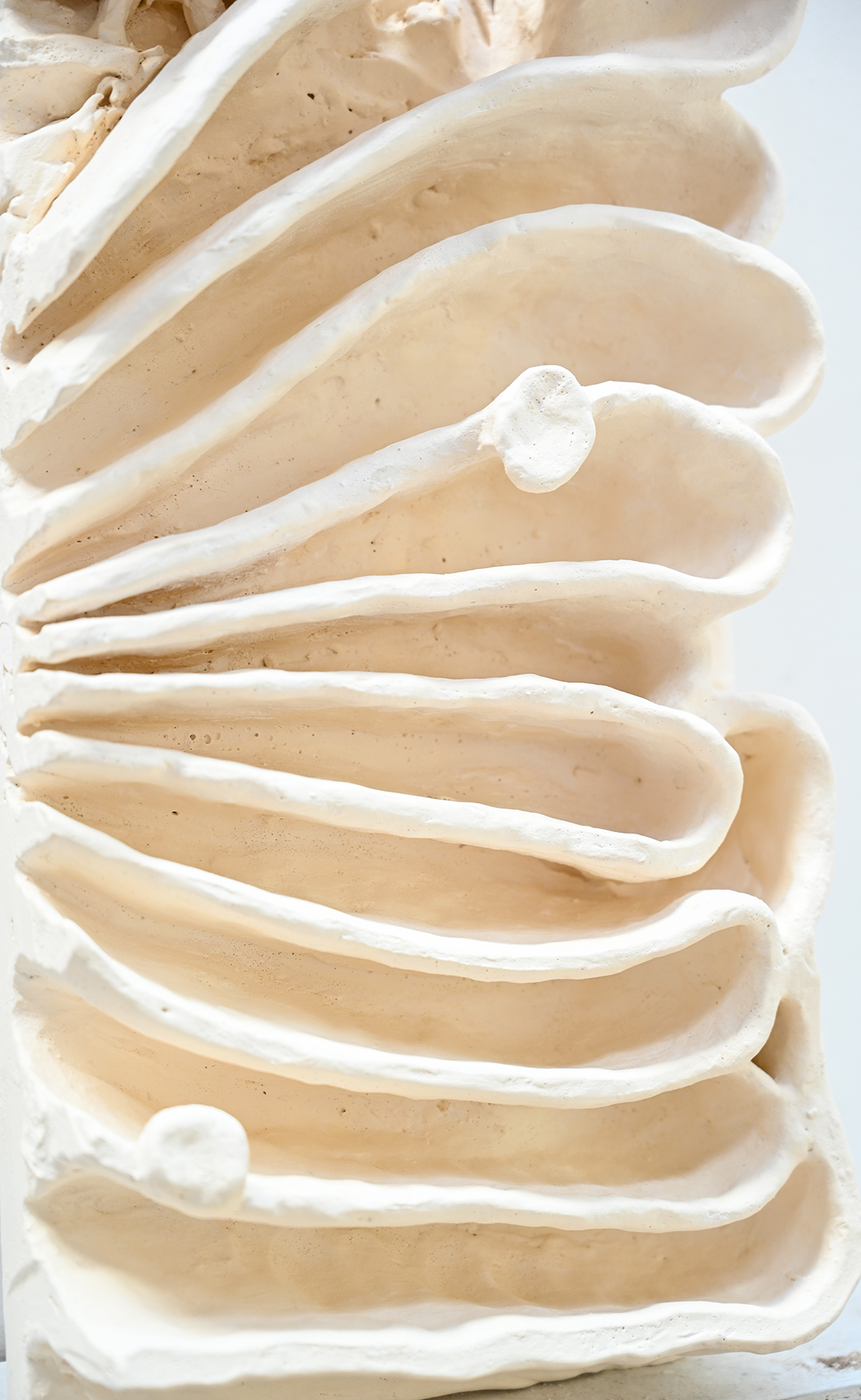
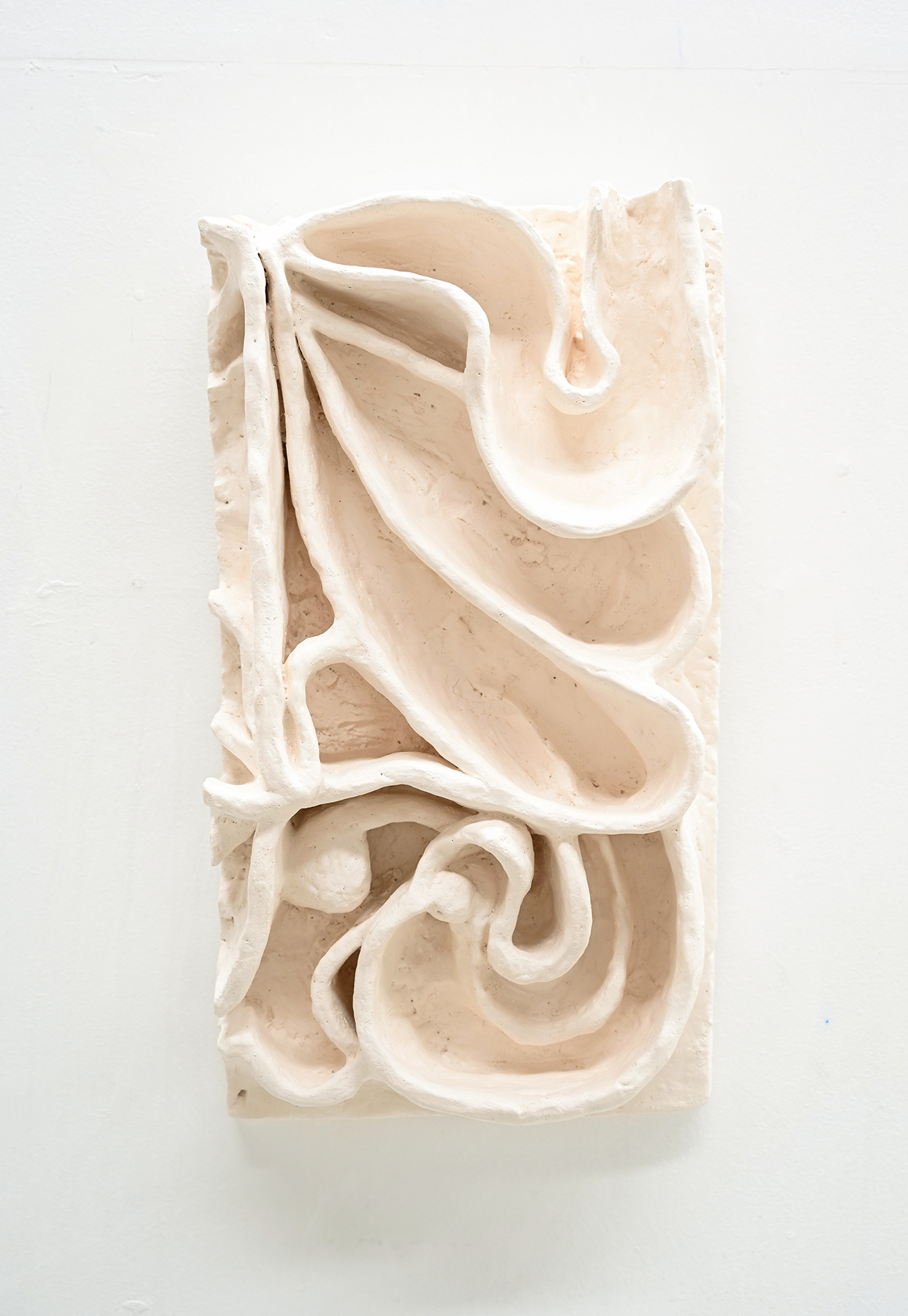
For Melbourne Art Fair, Carter presents a series of wall-based ceramic works that read as bodies caught mid-formation: calcified, folded, and pressed into relief. Their pale, bone-white porcelain surfaces evoke skeletal structures, vessels, and rib-like forms — anatomical without becoming illustrative.
Cavities, passages, and hollows open across the surface, suggesting blood vessels hardened into stone or muscles stretched thin, creating spaces of shelter and concealment.
At the same time, the forms resist a purely bodily reading. Twisting tendrils and swelling protrusions recall fossilised flora — vines, bulbs, and roots curled inward as they dry and calcify. Movement feels arrested rather than gestural, suspended between growth and decay. These works hover in a liminal space where body and landscape collapse into one another, carrying mythic undertones of burial, exposure, and persistence. Smoothed by time yet densely tactile, Carter’s sculptures hold the tension between fragility and endurance, presenting matter as something continually shaped by pressure, erosion, and memory.
Mira Gojak is an Australian artist based in Naarm, Melbourne, known for sculptures that operate as linear drawings in space and for works on paper that explore gesture, movement, and perception. Her practice is informed by poetry, music, and art history, and often navigates the threshold between abstraction and figuration.
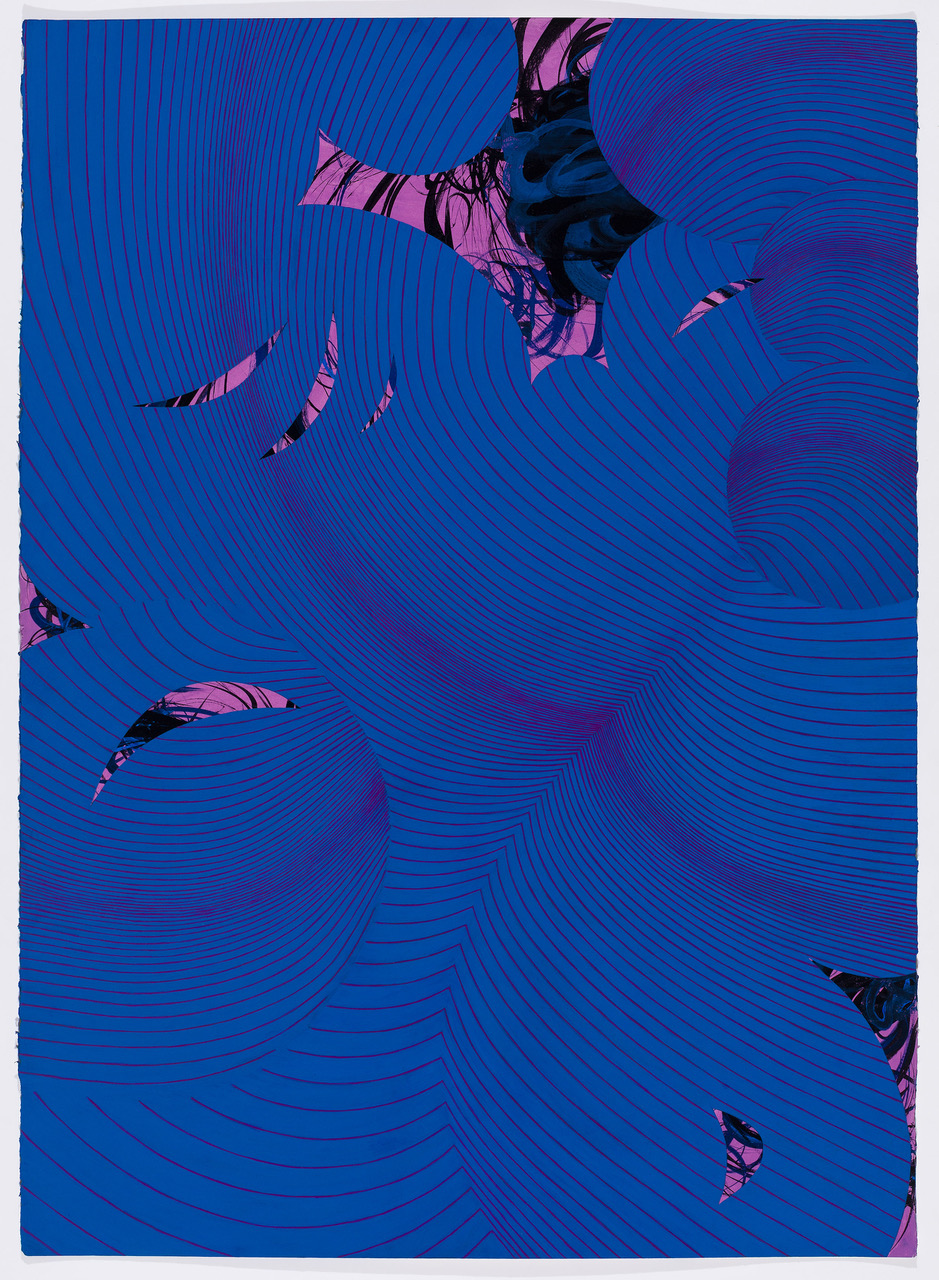
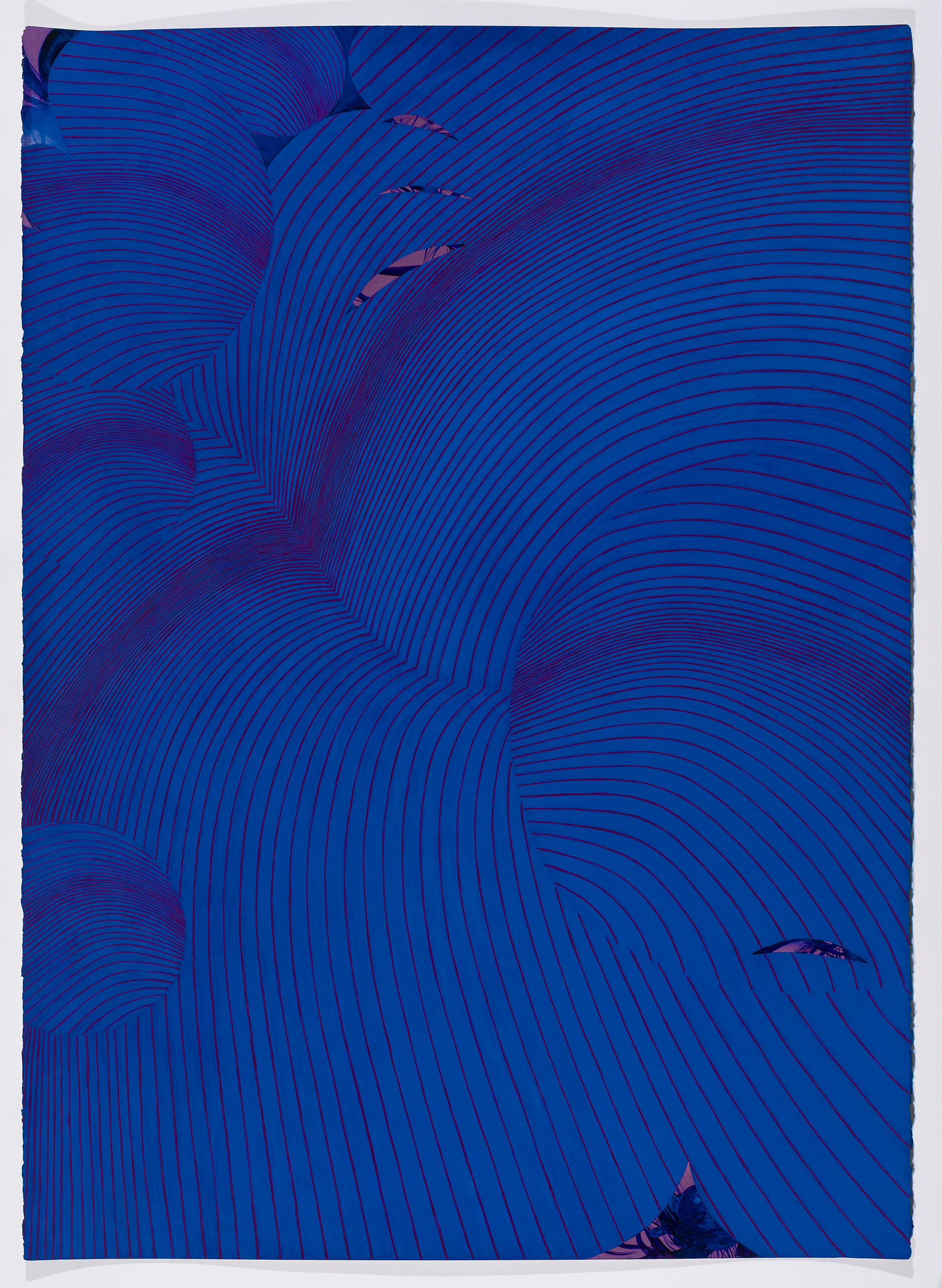
For Melbourne Art Fair, Gojak presents a group of mixed media drawings dominated by expansive fields of twilight blue. Built through layered watercolour, acrylic, and drawn line, the surfaces are dense yet porous, interrupted by fine rhythmic contours and areas where violet emerges — shifting optically toward pink or bruised red. These underlayers feel bodily and emotional as though something internal presses through the surface. Lines repeat, curve, and expand outward, generating a slow, navigational movement across the page.
Gojak’s drawings sit deliberately between control and intuition, echoing Amy Sillman’s observation that “gesture exists between abstraction and figuration, between language and image.” Informed by Greek mythology, the works align more closely with Demeter’s perspective — her grief, vigilance, and deep attunement to her daughter’s cyclical movement between worlds. This mythic framework infuses the drawings with a sense of threshold and transition, where gesture becomes a means of navigation rather than declaration. Referring to these works as drawings rather than paintings, Gojak describes the process as feeling one’s way forward, like moving through a cave with limited light. In a time shaped by instability and retreat, the works resist closure, remaining open, expansive, and quietly charged. *
~
Twilight fills the trees, 2026
I know in advance there will be mistakes, so I allow for an art making process that can make something of this. It’s an attempt to remain open to possibilities while working from a position of uncertainty.
The works on paper begin with the kinetic pleasure of gestures made from fast, fluid movements . At some point, the rhythm is interrupted and contracted by mistakes and irritations. These are then blocked out and a more careful and deliberate response slowly traces pathways tunnelling out, avoiding all centripetal tendencies. Sometimes it’s a total wipe out.
I try to daydream, so I look at the sky, generally before and after work. Twilight at the beginning of the day and at the end, has three geometric phases (determined by the angle of the Sun below the horizon), Civil, Nautical and Astronomical. Nautical twilight in the evenings, is when the first star appears while the earth’s horizon line is still visible. In the past, these two reference points helped sailors navigate their paths while at sea. Mira Gojak
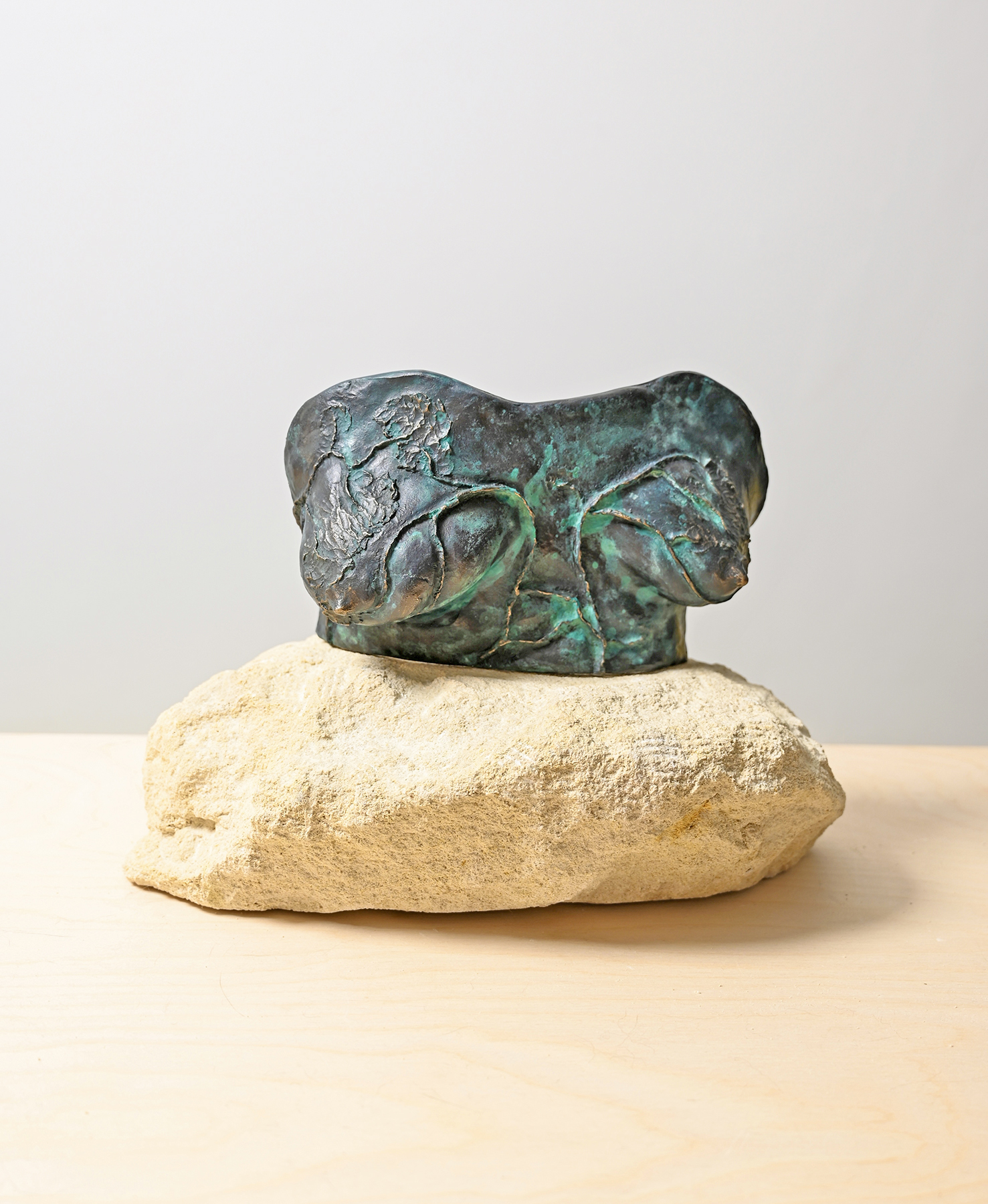
Noriko Nakamura
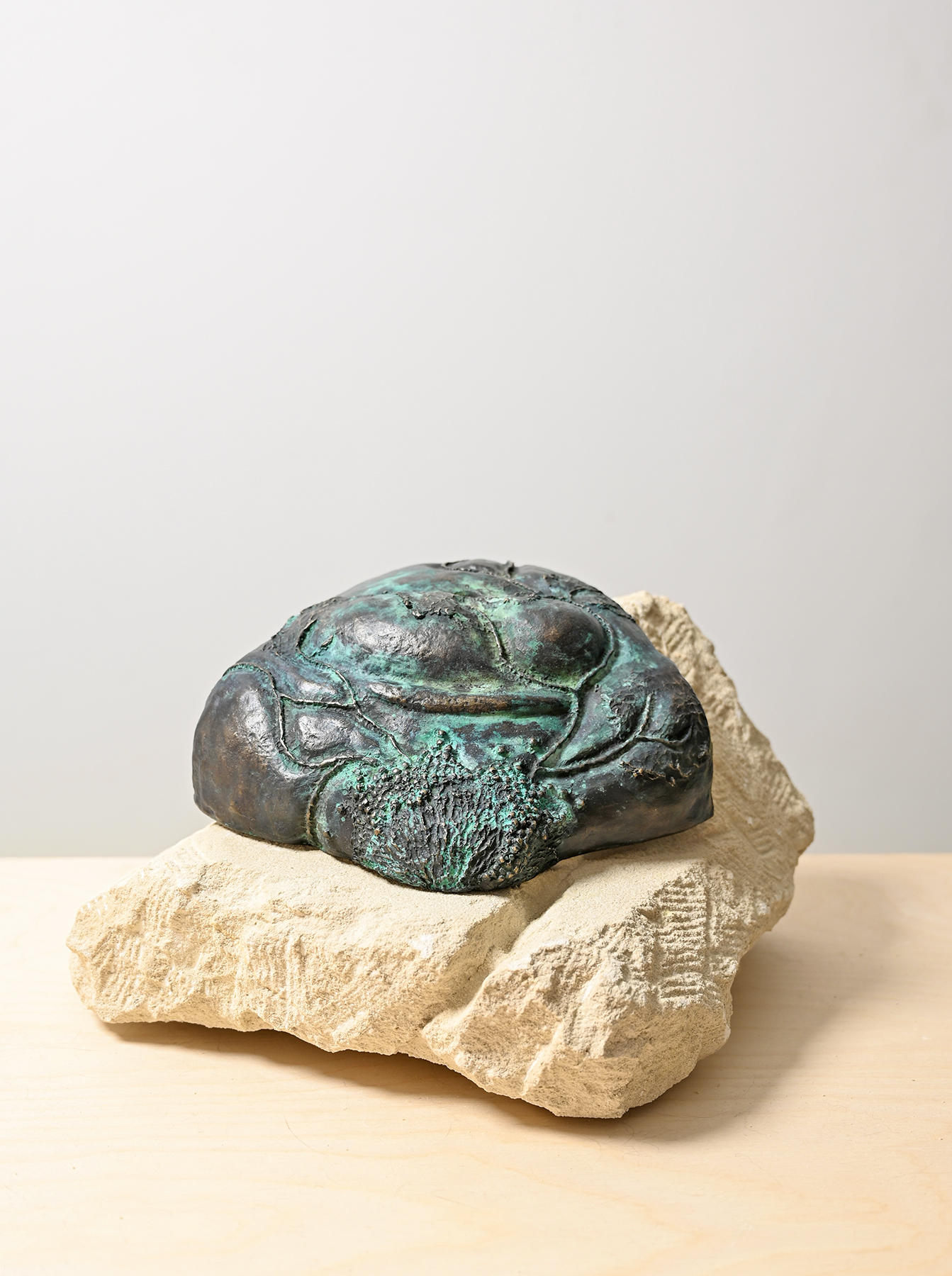
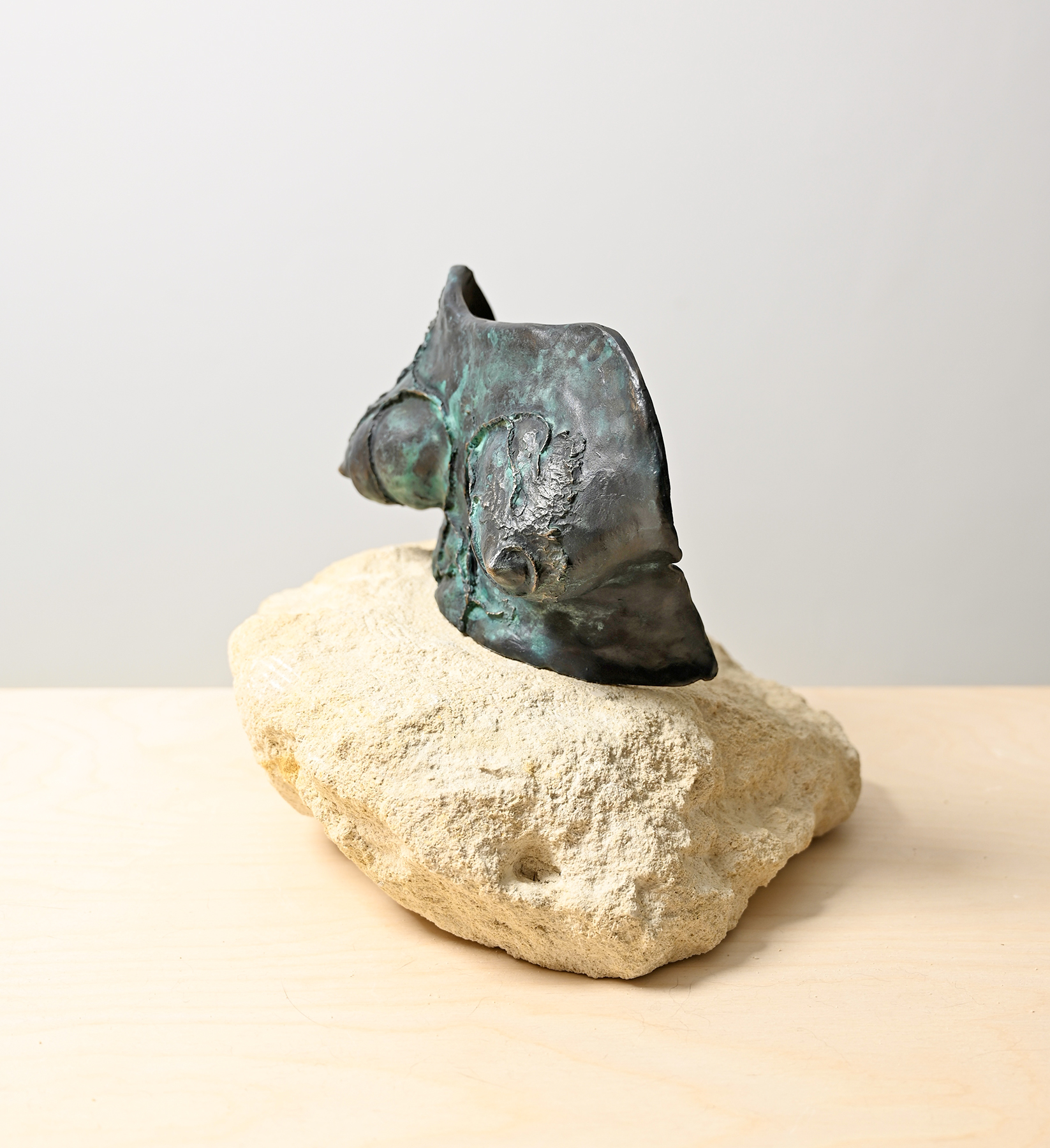
My work explores the complexity of female embodied experiences and reimagines the narratives of feminine subjectivity for empowerment. My installation practice reflects on women’s experiences of bodily transformations such as pregnancy, childbirth, and menopause. My practice expands on my ongoing interest in Japanese animism Shinto through working with natural materials. In Shinto, humans are part of the natural world, and there is no clear divide between humans and the natural world. I have been exploring sexual encounters between women and nature to possibly disrupt Western dualistic binaries of human/nature.
The three segmented body parts depict a woman having a sexual encounter with the slime mould. The slime mould creeping on her body, crawling on her breasts and touching her nipples, spores spreading around her pubic hair, her toes cringe with the pleasure of orgasm. I imbued my stone carving practice with bronze casting in this exhibition, which is a new medium for me. I was interested in the process of extracting minerals (copper) from molten ore(stones), in which finely grounded limestones are used to extract the earth’s geological time. Through combining limestone and bronze sculptures, my practice aims to explore a new kind of perspective to shift how we perceive our bodies and our understanding of culture around female bodies.